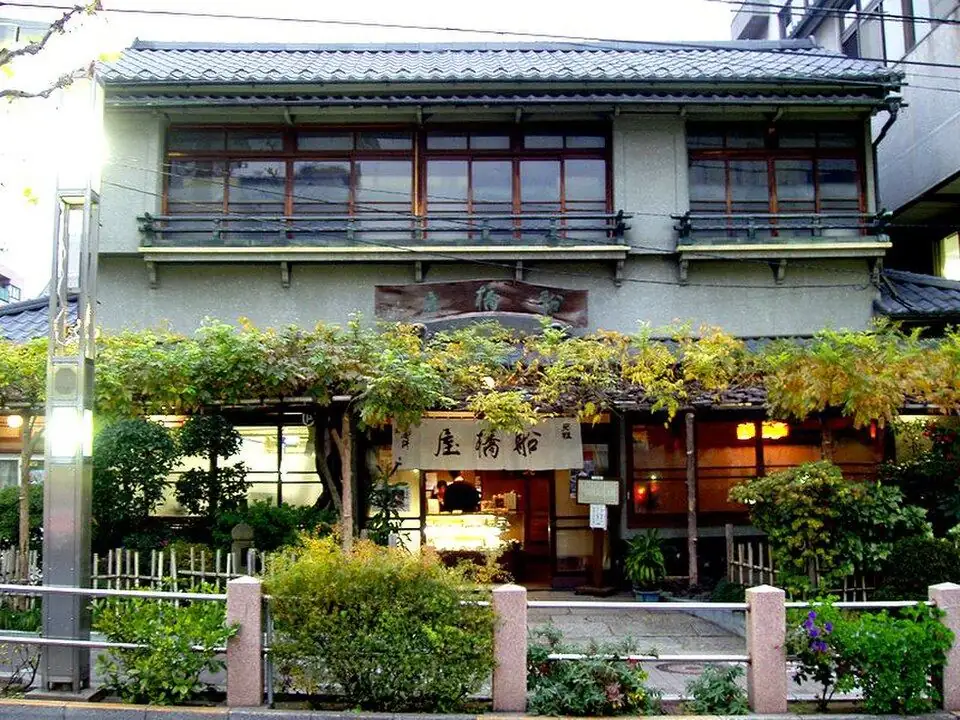
Funabashiya (main shop)
In Japanese: 船橋屋 亀戸天神前本店
Est. 1805
Funabashiya is a kuzumochi shop right beside Kameido Tenjin Shrine in Tokyo, open since 1805. Its kuzumochi (chewy cakes of fermented wheat starch) ferments for about 15 months before it is steamed, cut into trapezoids and served with black sugar syrup and roasted soybean flour. The main shop has a tea room, where a signboard written by the novelist Yoshikawa Eiji hangs.
- What to try
- Kuzumochi with black syrup and soybean flour
- Address
- 3-2-14 Kameido, Koto-ku, Tokyo
- Getting there
- About a 10-minute walk from Kameido Station (JR Sobu Line)
- At the shop
- Eat inTake out
- Founded
- 1805
- Era
- Edo period
- Food
- Wagashi
Dishes said to begin here
- Kuzumochi of Kameido
The founder, Kansuke, was born in Funabashi in Shimosa Province, then known for good wheat.
More about Kuzumochi of Kameido →
About Funabashiya (main shop)
The founder, Kansuke, came from Funabashi in Shimousa Province, a wheat-growing region. Seeing the crowds of worshippers at Kameido Tenjin Shrine, he moved to Edo (now Tokyo). He kneaded wheat starch with hot water, steamed it and topped it with black sugar syrup and roasted soybean flour. The cakes later came to be called kuzumochi. In the early Meiji era (1868–1912), a broadsheet ranking listed them among the well-known foods of Edo.1
The cakes start as wheat starch. Wheat dough is washed in water to separate the starch from the gluten, and the starch ferments with lactic acid bacteria in cypress barrels for about 15 months (450 days). It is rinsed over several days to remove the sourness and smell, cooked in water at about 96°C, poured into wooden frames and steamed. The cakes are cut into trapezoids, which waste less and hold the syrup and soybean flour well. The syrup uses plenty of black sugar, and the soybean flour is coarsely ground.38
The prewar main shop, built in the mid-Meiji era, burned in the air raids of March 1945, but the method for the fermented starch survived. When the shop was rebuilt in 1953, it asked the novelist Yoshikawa Eiji, who liked its black syrup, to write its signboard. He brushed the name on a single plank of zelkova early the next year. The signboard still hangs in the main shop's tea room, which serves freshly made kuzumochi. The current owner is the 8th generation.13
It is about a 10-minute walk from Kameido Station (JR Sobu Line) along Meiji-dori Avenue, right beside Kameido Tenjin Shrine on Kuramaebashi-dori Avenue. The area has long been busy with worshippers in plum and wisteria season.12
History
- 1805
Opens near Kameido Tenjin Shrine.
- 1945
The main shop burns in the March air raids.
- 1953
The main shop is rebuilt, and Yoshikawa Eiji is asked to write its signboard.
At the shop
Stories
Photos2 photos
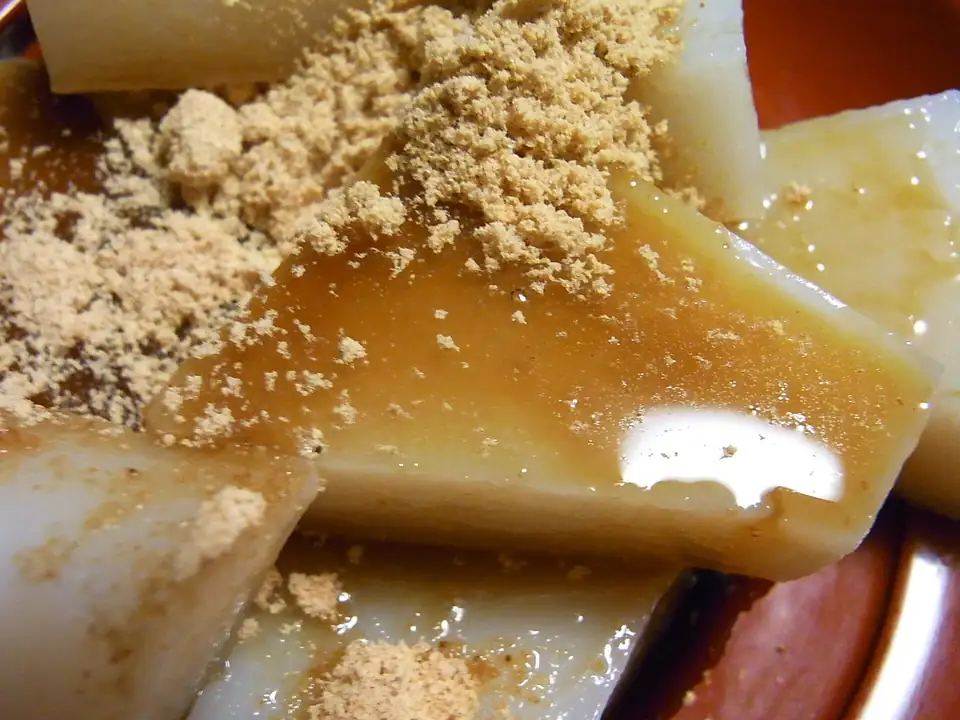
Kuzumochi (chewy cakes of fermented wheat starch) with brown sugar syrup and kinakoPhoto: 江戸村のとくぞう · CC BY-SA 4.0 · Wikimedia Commons
Compiled by our editors from public sources. We warmly welcome corrections from the shop.
Walks including this shop
Nearby



Same food
 Est. c. 1349Shiose SohonkeShiose manju (steamed buns with yam and rice-flour dough)See this shop →
 Est. c. 1421Kameya MutsuMatsukaze (baked miso cake)See this shop →
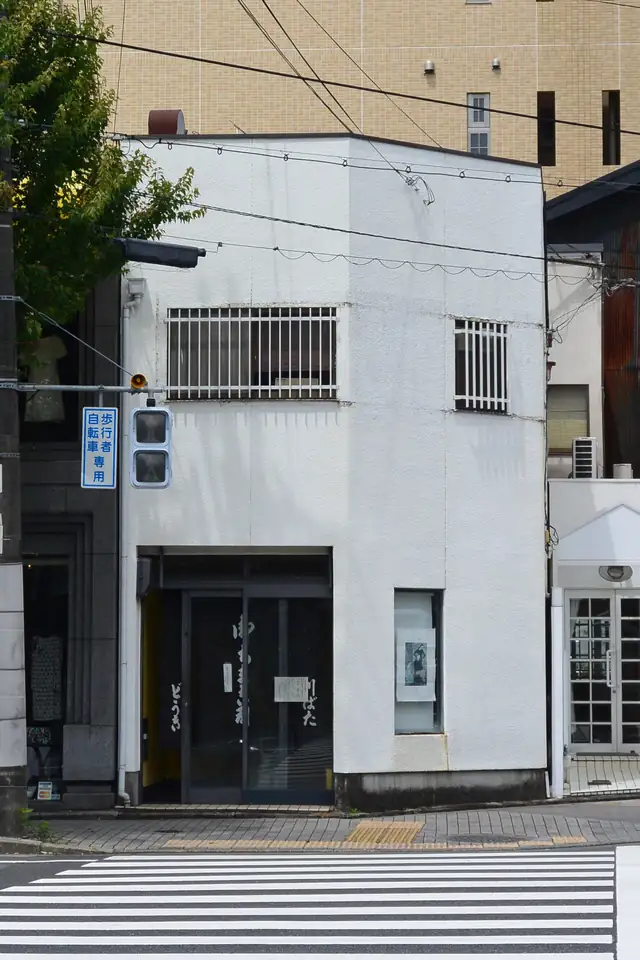 Est. 1503Kawabata DokiSuisen chimakiSee this shop →
 Est. c. 1569OsekimochiOseki mochi (plain and mugwort rice cakes topped with coarse bean paste)See this shop →
When this shop first opened
1805
221 years since.
- 1802The first volume of Tokaidochu Hizakurige appears
- 1805Founded
- 1853Perry's ships arrive at Uraga
- 2026Today
Each event on the timeline is checked against a source.
See sources
1802: 静岡県立中央図書館「温故知新」十返舎一九と『膝栗毛』; 1853: 外務省「六月三日ヨリ十二日迄異国船進退之図」解説