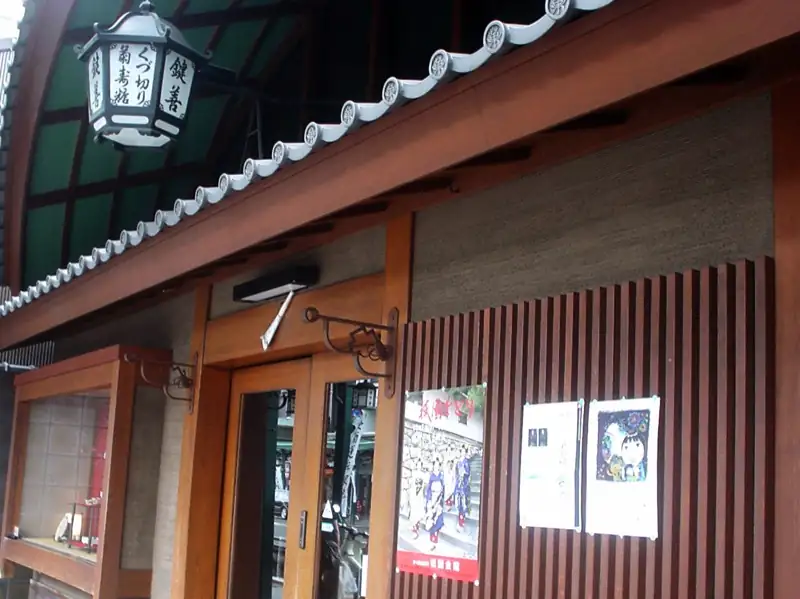
Kagizen Yoshifusa Shijo (main shop)
In Japanese: 鍵善良房 四条本店
Est. c. 1716
Kagizen Yoshifusa is a Kyoto sweets shop on Shijo-dori in Gion, below the steps of Yasaka Shrine, said to date from the Kyoho era (1716–1736). Its tearoom at the back serves kuzukiri (cool noodles of kudzu starch), made to order from Yoshino kudzu. It also makes Kikujuto, chrysanthemum-shaped dry sweets of wasanbon sugar.
- What to try
- KuzukiriKikujuto wasanbon sweets
- Address
- 264 Gionmachi Kitagawa, Higashiyama-ku, Kyoto
- Getting there
- About a 3-minute walk from Exit 7 of Gion-Shijo Station (Keihan Line)
- At the shop
- Eat inTake out
- Founded
- c. 1716
- Era
- Edo period
- Food
- Sweets café
About Kagizen Yoshifusa Shijo (main shop)
Kagizen is said to date from the Kyoho era (1716–1736) in the mid-Edo period (1603–1868). Old papers kept in the family storehouse show the name Kagizen at Nawate-Shijo in 1695, and a sweets box carries the year 1726. In the Edo period the shop was called Kagiya Yoshifusa. The family heads passed down the name Zen, so people called the shop “Zen of Kagiya,” which became Kagizen. In the early Meiji era (1868–1912), the shop moved to its present site when Shijo-dori was widened.1236
Kuzukiri is made only from Yoshino kudzu starch and water, and each order is finished when it is placed. The strips are served floating in iced water, with a dark syrup of brown sugar from Hateruma Island in Okinawa, or a light syrup. Its reputation spread through deliveries to Gion teahouses and the Minamiza theater, and after the shop reopened in 1955 it began serving it as an after-meal sweet. Kikujuto is a chrysanthemum-shaped dry sweet of Awa wasanbon sugar, and a mold dated 1864 survives in the shop.13456
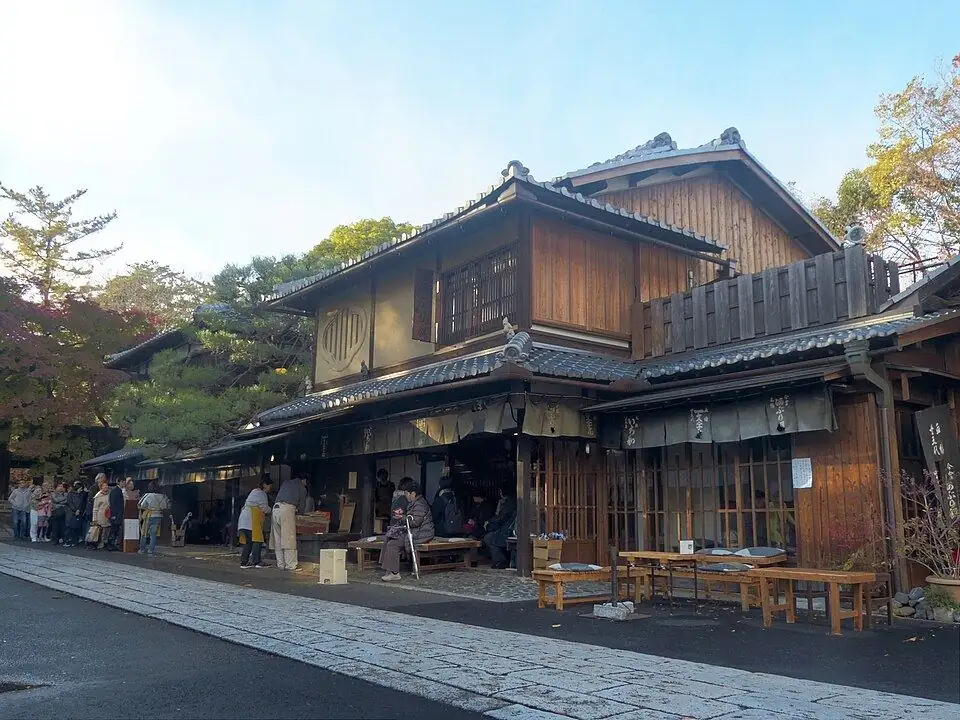
Sweets are sold at the front, and the tearoom is at the back. In the early Showa era (1926–1989), the 12th head asked the woodworker Kuroda Tatsuaki to furnish the shop, and his sweets cabinet still stands inside. Kuroda was later named a Living National Treasure for woodwork. The tearoom looks onto a garden, with ceramics by Kawai Kanjiro and others, and a name board written by the author Mushanokoji Saneatsu. The shop was fully rebuilt in 1998.1467
It is about a 3-minute walk from Exit 7 of Gion-Shijo Station on the Keihan Line, close to the west gate of Yasaka Shrine. The tearoom does not take reservations, and kuzukiri is served only in the tearoom.1457
History
Lineage
- Kagiya YoshifusaName in the Edo period
- Kagizen YoshifusaFrom the name Zen passed down by the family heads
Drawn only from what the sources state.
- 1716
Said to be founded in Gion.
- 1726
A sweets box dated this year survives in the shop.
- 1883
Appears in the Kyoto guide Miyako no Sakigake.
- 1942
The 12th head dies; the shop closes for a time during the war.
- 1955
The shop reopens.
- 1998
The shop is fully rebuilt.
At the shop
Photos2 photos
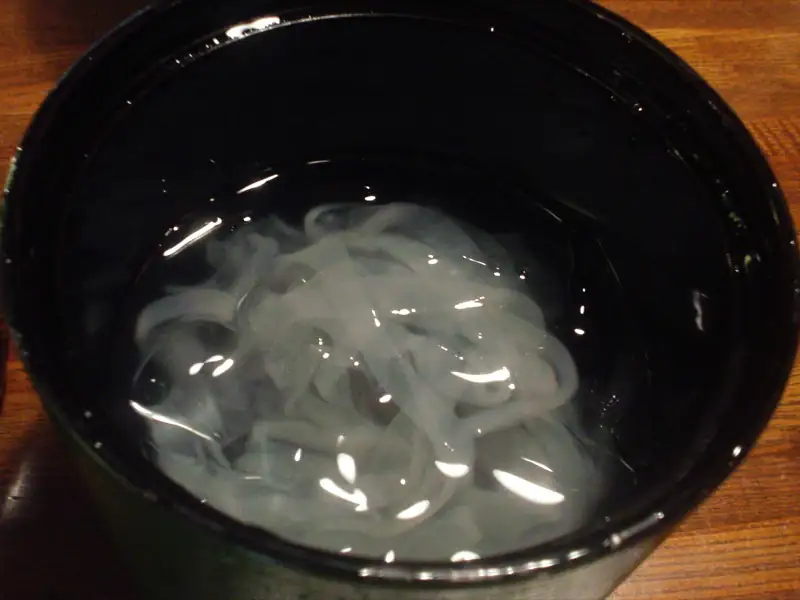
Kuzukiri arrowroot noodles (taken at the Kodaiji shop in 2007)Photo: 挪威 企鵝 · CC BY-SA 2.0 · Wikimedia Commons
Compiled by our editors from public sources. We warmly welcome corrections from the shop.
Walks including this shop
Nearby
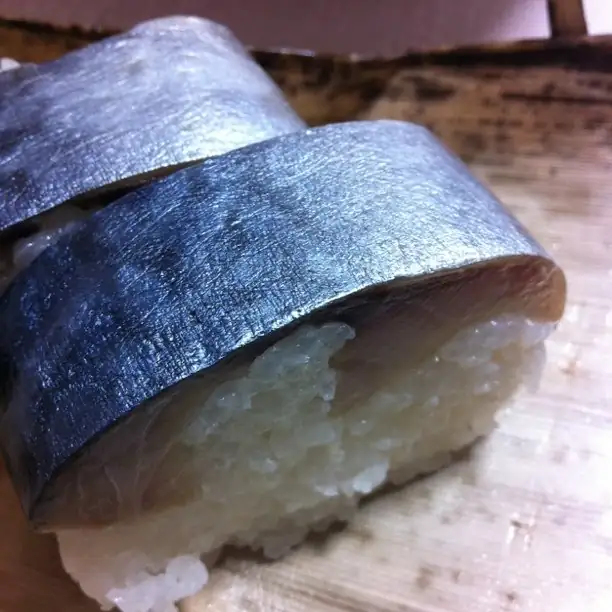 Est. 1781IzuuSaba sugata-zushi (whole mackerel sushi)See this shop →
 Est. 1819Gion ManjuShinko rice-flour sweetsSee this shop →
 Est. 1805Izutsu Yatsuhashi Honpo Gion (main shop)Izutsu yatsuhashi and the soft yatsuhashi Yuko and YugiriSee this shop →
 Est. 1870Kodaiji WakudenTaiza crab grilled over the hearth (winter)See this shop →
Same food

When this shop first opened
c. 1716
310 years since.
- 1689Basho sets out on The Narrow Road to the Deep North
- 1716Founded
- 1774Kaitai Shinsho is published
- 2026Today
Each event on the timeline is checked against a source.
See sources
1689: 山口県文書館 解説資料「おくのほそ道」; 1774: 山口県文書館 解説資料「蘭学(解体新書)」