
Fuka (Nishiki shop)
In Japanese: 麩嘉 錦店
Est. c. 1824
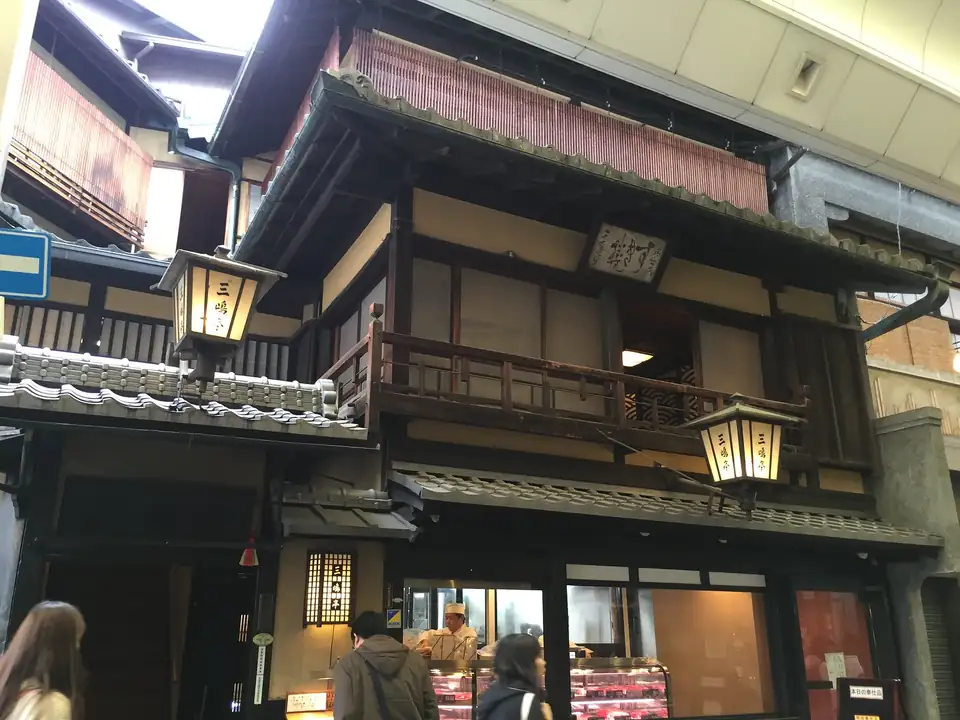
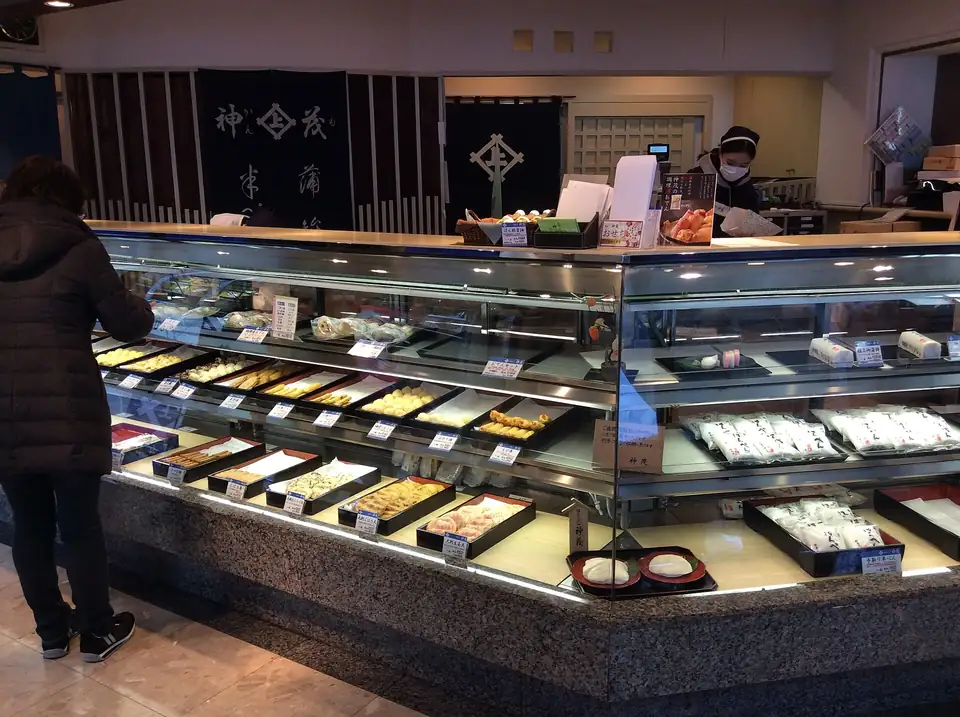
Fuka's Nishiki shop is the retail outlet, on a corner of Nishiki Market, of a nama-fu (fresh wheat gluten) maker in Kamigyo that has long supplied the imperial palace, open since around 1824. Fuka is said to have created fu-manju, bean paste wrapped in fu and a bamboo leaf. Seasonal fu and freshly grilled fish-shaped fu are also sold.
- What to try
- Fu-manjuseasonal nama-fu, tai-shaped grilled fu
- Address
- 534-1 Kikuya-cho, Nakagyo-ku, Kyoto
- Getting there
- Within walking distance of Shijo Station (Karasuma subway line) and Karasuma Station (Hankyu)
- At the shop
- Take out
- Founded
- c. 1824
- Era
- Edo period
- Food
- Pickles & tofu
About Fuka (Nishiki shop)
Fuka has supplied fu to the Kyoto Imperial Palace since long ago, but its founding year is not known exactly, because its records burned in the unrest of the late Edo period. A pass for entering the palace is dated in the Keio era (1865–1868), and the current owner is the seventh generation since then. The original shop, the founding site on Nishinotoin-dori, burned several times, including in the fire of the Kinmon Incident of 1864, but it has always traded on the same spot.62
Nama-fu is made by kneading wheat flour with water, taking out the gluten, mixing it with glutinous rice flour and steaming it. More than 60 percent of it is water, so the main shop draws up groundwater. In front of the main shop is Shigenoi, a well said to have flowed since the Heian period. Apart from simple steps such as mixing, all of it is made by hand, with 30 to 40 kinds prepared each morning to restaurants' orders.62
Fu-manju is house-made smooth bean paste wrapped in fu kneaded with green laver, then rolled in a bamboo leaf; Fuka says it made the first ones. Tradition says the idea came from Emperor Meiji. Seasonal items appear too, such as hagi-fu and fu-manju with chestnut in autumn, and cherry fu-manju in spring.627
As more people came for fu-manju, the main shop, which mostly supplies restaurants, could not keep up, so a retail shop was opened in Nishiki Market. A 2020 renovation gave it a design close to the main shop, with a sliding door at the entrance. The Nishiki shop also sells fu grilled in a single fish-shaped mold, and there are tables for eating in. Buying at the main shop requires a booking in advance.254
History
- 1864
The main shop on Nishinotoin-dori burns in the fire of the Kinmon Incident.
- 2020
The Nishiki shop is renovated in a style close to the main shop.
Sources: 2
At the shop
Compiled by our editors from public sources. We warmly welcome corrections from the shop.
Nearby



Same food


When this shop first opened
c. 1824
202 years since.
- 1802The first volume of Tokaidochu Hizakurige appears
- 1824Founded
- 1853Perry's ships arrive at Uraga
- 2026Today
Each event on the timeline is checked against a source.
See sources
1802: 静岡県立中央図書館「温故知新」十返舎一九と『膝栗毛』; 1853: 外務省「六月三日ヨリ十二日迄異国船進退之図」解説