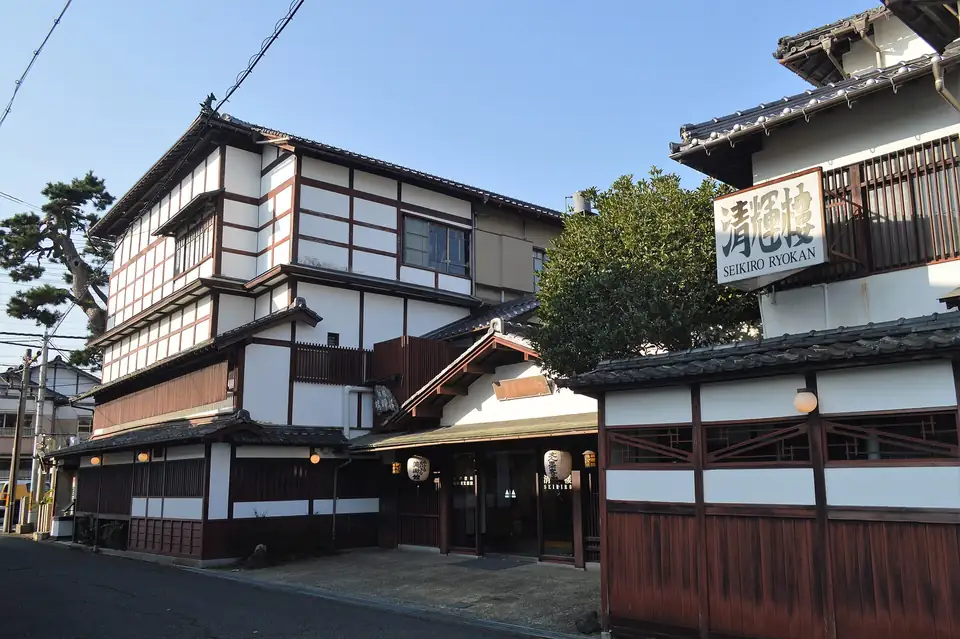
Seikiro
In Japanese: 文人墨客の宿 清輝楼
Est. c. 1688
Seikiro is a ryokan (traditional inn) known for its cooking in the old castle town of Miyazu, open since the Genroku era (1688–1704). Its meals center on seafood landed at Miyazu Port. Non-guests can book lunch or dinner by the day before. Paintings and calligraphy left by Edo-period artists and modern writers hang throughout the building.
- What to try
- Seafood kaiseki from Miyazu Portwinter yellowtail and snow crab
- Address
- 937 Uoya, Miyazu, Kyoto
- Getting there
- About an 8-minute walk from Miyazu Station (Kyoto Tango Railway)
- At the shop
- Eat inTake out
- Founded
- c. 1688
- Era
- Edo period
- Food
- Kaiseki & ryotei
About Seikiro
According to the city of Miyazu, Seikiro began as an inn in the Genroku era in Honmachi, then the center of the castle town. It moved to its present site in Uoya in 1901 and grew through additions in the late Meiji and Taisho eras. The wooden building, two stories with a partial third floor, became a Registered Tangible Cultural Property in 2010.124
Painters from Kyoto stayed here in the Edo period, and later guests such as the poet Ujo Noguchi and the writers Kan Kikuchi and Eiji Yoshikawa left calligraphy and paintings. The third-floor banquet hall has sliding doors painted by Suzuki Hyakunen with scenes of the twelve months. A long picture map of the Tango coast, made in 1805, hangs in a second-floor corridor. The inn calls the whole building a “little, little museum.”124
Meals center on seafood from Miyazu Port. For the year-round Miyazu kaiseki (a seasonal multi-course meal), the head chef chooses fish from that day’s catch. Spring brings sea bream shabu-shabu, summer torigai cockles and rock oysters, and autumn salmon from the Yura River with dobin-mushi (broth steamed in a small teapot). Winter courses feature yellowtail or snow crab. Non-guests can have lunch or dinner, and a tempura rice bowl is sold to take out.34
It is about an 8-minute walk from Miyazu Station. Both the day-use meals and the take-out tempura bowl must be booked by the day before.35
History
- 1688
Said to have opened as an inn in Honmachi.
- 1901
Moves to its present site in Uoya.
- 1924
Another addition is built, following those of the late Meiji and early Taisho eras.
- 2010
The building becomes a Registered Tangible Cultural Property.
At the shop
Compiled by our editors from public sources. We warmly welcome corrections from the shop.
Same food


When this shop first opened
c. 1688
338 years since.
- 1603The Edo shogunate begins
- 1688Founded
- 1774Kaitai Shinsho is published
- 2026Today
Each event on the timeline is checked against a source.
See sources
1603: 東京都都市整備局『東京の都市づくり通史』序章; 1774: 山口県文書館 解説資料「蘭学(解体新書)」