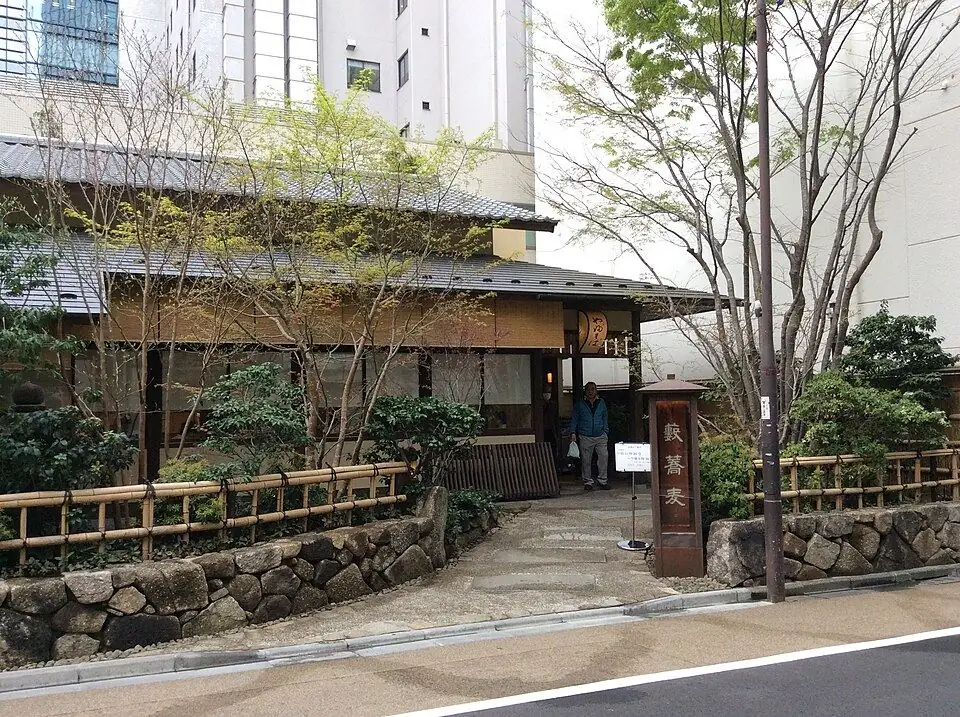
Kanda Yabusoba
In Japanese: かんだやぶそば
Est. 1880
Kanda Yabusoba is a soba (buckwheat noodle) restaurant in Kanda Awajicho, Tokyo, open since 1880. It began when the founder took over a branch of Dangozaka Yabu soba, a shop popular in late Edo-period Tokyo. It is regarded as the head house of the Yabu soba tradition. It is known for its greenish soba and for soba with grated yam.
- What to try
- Seiro sobasoba with grated yam, seasonal soba
- Address
- 2-10 Kanda-Awajicho, Chiyoda-ku, Tokyo
- Getting there
- A 2-minute walk from Exit A3 of Awajicho Station (Tokyo Metro Marunouchi Line)
- At the shop
- Eat inTake out
- Founded
- 1880
- Era
- Meiji era
- Food
- Soba
About Kanda Yabusoba
In 1880, Hotta Shichibei took over the Kanda Renjakucho branch of Dangozaka Yabu soba, a shop officially named Tsutaya that was popular in late Edo-period Tokyo. The Dangozaka shop was called Yabu after the bamboo grove (yabu) on its grounds, and it closed at the end of the Meiji era. Kanda Yabusoba is now regarded as the head house of the Yabu soba tradition. The company is led by the fifth generation, Hotta Kotaro.12
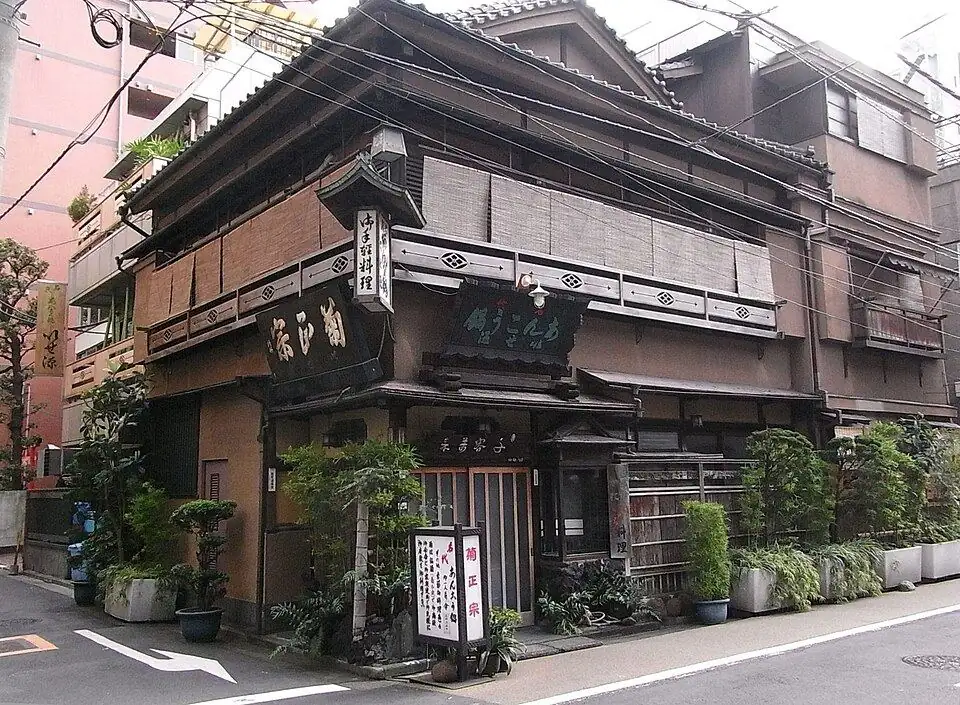
The shop burned in the Great Kanto Earthquake of 1923 and was rebuilt in wood three months later. That building survived the war and was selected as a Tokyo historic building in 2000. It burned in a fire in February 2013. On October 20, 2014, the restaurant reopened in a new building on the same site, made of steel in the sukiya style of traditional architecture. The old signboard, which survived the fire, hangs on the second floor.23
The soba has a greenish color and is made with domestic buckwheat flour. Soba-toro comes with sticky grated yamato yam, and kamo seiro is cold soba dipped in a broth with duck. Seasonal dishes include arare soba in winter, with scallops scattered like hailstones. Toasted nori comes in a box warmed by charcoal. Orders are still called out to the kitchen in a traditional chant.123
The first floor has a counter and a raised tatami area that looks onto a garden. The second floor has private rooms. It is a 2-minute walk from Exit A3 of Awajicho Station (Tokyo Metro Marunouchi Line) or from Ogawamachi Station (Toei Shinjuku Line).123
History
Lineage
- Dangozaka Yabu soba (Tsutaya)Sendagi; popular in the late Edo period
- Kanda Renjakucho branch
- Kanda YabusobaTaken over in 1880; 5th generation
Drawn only from what the sources state.
- 1880
Hotta Shichibei takes over the Kanda Renjakucho branch of Dangozaka Yabu soba.
- 1923
The shop burns in the Great Kanto Earthquake and is rebuilt in wood three months later.
- 2000
The building is selected as a Tokyo historic building.
- 2013
In February, a fire destroys the building and the shop closes.
- 2014
On October 20, the shop reopens in a rebuilt building.
At the shop
Stories
- From Dangozaka to Kanda: how Edo’s Yabu soba beganHow a soba shop surrounded by bamboo on the edge of Edo became the talk of the city, and how its line continues in Kanda today.
- The corner the fires missed: old shops of Kanda RenjakuchoA small triangle spanning parts of Kanda-Sudacho and Awajicho, once called Renjakucho, where several century-old shops stand side by side.
Photos2 photos
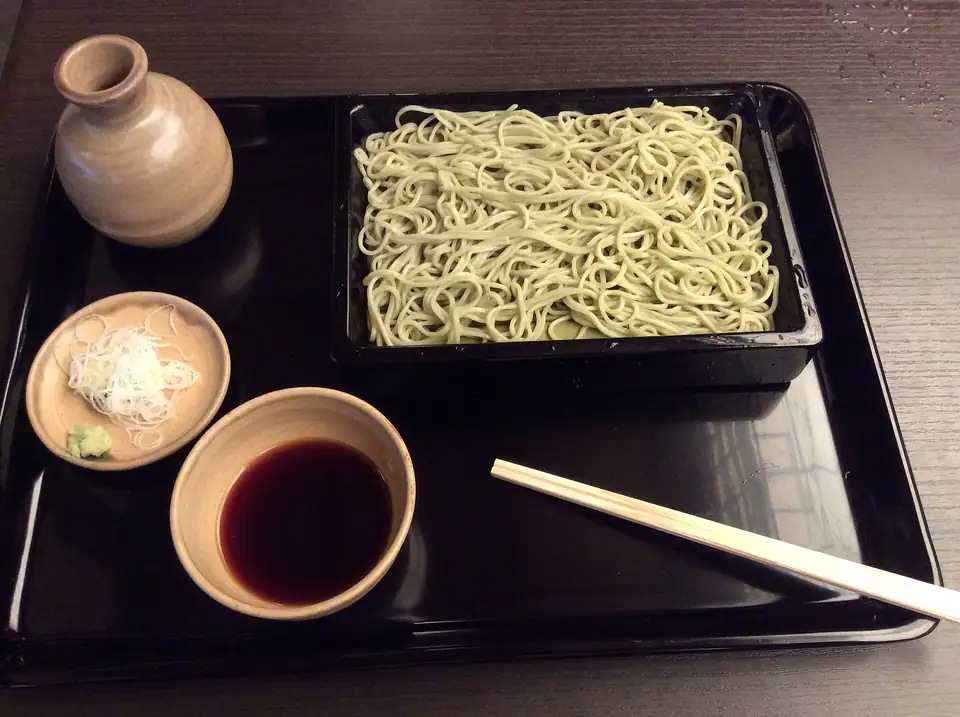
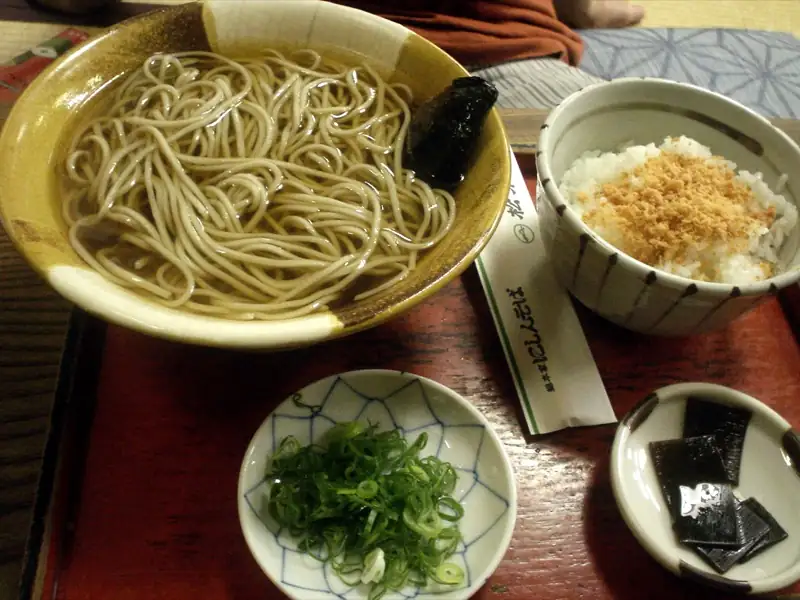
Seiro soba (chilled buckwheat noodles) with sakePhoto: 江戸村のとくぞう · CC BY-SA 4.0 · Wikimedia Commons
Compiled by our editors from public sources. We warmly welcome corrections from the shop.
Walks including this shop
Nearby

Same food


When this shop first opened
1880
146 years since.
- 1872Japan's first railway opens
- 1880Founded
- 1895Heian Shrine is founded
- 2026Today
Each event on the timeline is checked against a source.
See sources
1872: 港区「鉄道開業150年 港区と鉄道の夜明け」; 1895: 観光庁 多言語解説文データベース「平安神宮 概要」(平安神宮)